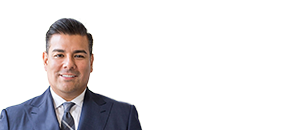

In September 2006, AB 2831 (Ch. 580, Statutes of 2006) sponsored by the Department of Insurance and authored by Senator Mark Ridley-Thomas extended this program for five more years until January 1, 2012.
It is the intent of the Legislature to provide an incentive in the form of California tax credits to attract much needed additional private capital investments that would not otherwise be available to CDFIs without the benefit of such incentive. It is the expectation of the Legislature that CDFIs will leverage these new investment dollars for the direct benefit of economically disadvantaged communities and low-income people in California.
Each calendar year, qualified investments in CDFIs totaling $10 million are eligible for tax credits of 20% of the investment amount ($2 million in total tax credits.) Credits are certified in the order that complete applications are received, subject to the following calendar year limits and set-asides:
1. Until July 1, tax credits for the following investment amounts are set-aside:
- $3 million for small investments (individual investment amounts of $300,000 or less)
- $2.5 million for investments by admitted insurers
Thus credits are available each calendar year for investments totaling $4.5 million without regard to set-asides.
2. Until October 1, maximum total investments for any one CDFI or its affiliates is $4 million.
Community Development Financial Institutions (CDFIs) are mission-driven private financial institutions in California specifically dedicated to, and whose core purpose is, providing financial products and services to people and communities underserved by traditional financial markets. They seek to bridge the growing gap that exists between the loans and services available to the economic mainstream and those offered to low-income people and communities, as well as the nonprofit institutions and businesses that serve them.
In addition, they serve a critical role in addressing issues of poverty and access to credit in economically disadvantaged communities by providing development services or technical assistance along with the loans and investments they make for community and economic development.
A CDFI may include a community development loan fund, credit union, bank, microenterprise fund, corporation-based lender or venture fund.
Click on the link below for a list of COIN Certified California CDFIs:
List of Currently Certified CA CDFIs
A qualified investment is :
- A loan or deposit that does not earn interest, or
- An equity investment, or
- An equity-like debt instrument that conforms to the specifications for these instruments as prescribed by the U.S. Department of the Treasury CDFI Fund.
All qualified investments must be equal to or greater than $50,000 and for a minimum term of 60 months in exchange for a 20 percent tax credit for the taxable year in which the investment was made.
In addition:
- The CDFI shall have full use and control of the proceeds of the entire amount of the investment as well as any earnings on the investment for its community development purposes.
- The CDFI shall use the proceeds of the investment for a purpose that is consistent with its community development mission and for the benefit of economically disadvantaged communities and low-income people in California.
Any individual, fiduciary, estate, trust, partnership, or corporation with a valid tax identification number paying taxes under the California Personal Income Tax Law or Corporation Tax Law are eligible to make a qualified investment.
As of January 1, 2000, insurers became eligible to make qualified investments in exchange for a Premium Tax credit. Qualified investments made by foreign insurers will not be negated by a state's retaliatory law in the event that a foreign insurer's home state has a Premium Tax in excess of California's 2.35 percent.
A organization can be certified by COIN as a California CDFI by demonstrating that, consistent with the findings, declarations, and intent set forth in Section 12939 of the Insurance Code:
- It is a private financial institution located in this State; and
- Its primary mission is community development; and
- It lends in urban, rural, or reservation-based communities in this State.
The CDFI sends a written application requesting COIN to certify a qualified investment that it has accepted from a California taxpayer, along with information sufficient to substantiate qualification for the investment.
Typically, this would include:
1) The name of the investor;
2) The amount and date of the investment;
3) The amount of tax credit that is due the taxpayer;
4) The tax ID number for each individual, partner, or corporation making the investment;
5) A copy of the document setting forth the terms and conditions of the investment; and
6) A copy of the wire transfer or canceled check evidencing the amount and date of the investment.
Upon certification, COIN will issue the investor a certificate certifying the tax credit, and a copy of the certification will be sent to the CDFI. Certificates will be issued in the order that complete applications were received.
If a qualified investment is withdrawn before the end of the 60th month and not redeposited or reinvested in another CDFI within 60 days, there shall be added to the "tax," as defined in Section 28 of Article XIII of the California Constitution in the case of insurers, and Sections 17039 or 23036 of the Revenue and Taxation Code for all other investors, for the year in which the withdrawal occurs, the entire amount of any credit previously allowed.
If a qualified investment is reduced before the end of the 60th month, but not below fifty thousand dollars ($50,000), there shall be added to the "tax," as defined in Section 28 of Article XIII of the California Constitution in the case of insurers, and Sections 17039 or 23036 of the Revenue and Taxation Code for all other investors, for the year in which the withdrawal occurs, an amount equal to 20 percent of the total reduction for the year.
CDFIs are required to report the names, tax ID numbers, and relevant details of qualified investments for every taxpayer making a withdrawal or partial withdrawal of a qualified investment before the expiration of 60 months from the date of the qualified investment to:
1) COIN and the State Board of Equalization in the case of insurer investors,
(Revenue and Taxation Code, Section 12209);
2) COIN and the Franchise Tax Board for all other investors,
(Revenue and Taxation Code, Sections 17053.57 or 23657).
Yes. In 2006, the Legislature added a requirement for CDFIs to report to COIN their use of proceeds received from qualified investments under the California CDFI Tax Credit Program.
- California Organized Investment Network (COIN), Department of Insurance
300 Capitol Mall, 16th Floor, Sacramento, CA 95814
(916) 492-3525, (916) 323-1944 (Fax) - Franchise Tax Board, PO Box 942840, Sacramento, CA 94240-6090
- State Board of Equalization, PO Box 942879, Sacramento, CA 94279